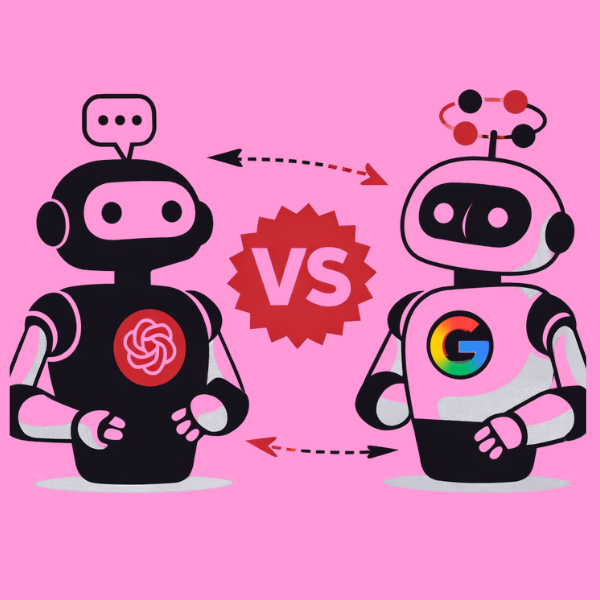
In the fast-evolving landscape of artificial intelligence, two titans stand out in 2025: ChatGPT by OpenAI and Gemini AI by Google DeepMind. These AI powerhouses are pushing the boundaries of what conversational and general AI can do, revolutionizing everything from customer service to research assistance, creative writing, and code generation. This AI capabilities comparison dives deep into the strengths, features, and use cases of both platforms to help users, developers, and businesses make informed decisions.
Let’s explore ChatGPT vs Gemini AI through various lenses: performance, integrations, user experience, strengths, weaknesses, and ideal applications.
Introduction to ChatGPT and Gemini AI
ChatGPT is a conversational AI developed by OpenAI, built on the GPT (Generative Pre-trained Transformer) architecture. With iterations such as GPT-3.5 and GPT-4, ChatGPT has grown into a widely adopted platform offering advanced reasoning, writing, coding, and creative capabilities. It powers millions of interactions daily via web apps, mobile apps, and API integrations.
Gemini AI, formerly known as Bard, is Google DeepMind’s flagship generative AI model. Evolved from LaMDA and later enhanced with DeepMind’s innovative research, Gemini is integrated across Google’s ecosystem, such as Search, Docs, Gmail, and Android, offering AI assistance that feels native to everyday digital tools.
ChatGPT Features
When examining ChatGPT features, several points stand out:
1. Conversational Mastery
ChatGPT is known for its fluid and human-like conversations. It excels at understanding context across multiple turns and generating coherent, accurate, and engaging responses.
2. Multimodal Abilities
In GPT-4 (especially GPT-4 Turbo), ChatGPT can process and generate not only text but also images, charts, code snippets, and more making it a powerful tool for visual tasks like interpreting screenshots or generating diagrams.
3. Memory and Custom Instructions
ChatGPT offers persistent memory, allowing it to recall user preferences across sessions. It can also be instructed with custom behaviors through system prompts or “Custom GPTs,” tailoring experiences to unique workflows.
4. Plugin and Tool Integration
In ChatGPT Plus and enterprise tiers, users can leverage powerful tools such as:
- Python (code interpreter)
- DALL·E (image generation)
- Web browsing for up-to-date information
- Third-party plugins (e.g., for booking, calculations, and document analysis)
5.API and Developer Ecosystem
OpenAI’s API allows developers to integrate ChatGPT into apps, websites, and enterprise systems with ease, supporting tasks like summarization, translation, email drafting, chatbot deployment, and more.
Gemini AI Features
- When analyzing Gemini AI features, Google’s unique approach and integration are crucial:
- 1. Native Google Integration
One of Gemini’s biggest strengths is its tight coupling with Google Workspace. Gemini can help you write emails in Gmail, analyze data in Sheets, summarize content in Docs, and even assist in search refinement in Google Search.
2. Real-Time Web Access
Unlike some versions of ChatGPT, Gemini has built-in, real-time access to Google Search results. This makes it especially useful for answering current-event queries or pulling the latest statistics and data.
3. Multimodal Input
Gemini supports text, images, audio, and even video input, showcasing its broad comprehension. It can analyze a picture or help generate code from a sketch, aligning with real-world creative and technical needs.
4. Cross-Device Integration
Gemini is deeply embedded in Android OS, offering contextual help across apps and system-level functionality. With Gemini as your virtual assistant, you can get suggestions, generate content, and access AI features system-wide.
5. Prompt Chaining and Notebook-Style Interface
In some versions, Gemini offers features that allow complex workflows like chained prompts or document-mode interactions ideal for researchers and developers.
Strengths of ChatGPT
- Advanced Reasoning: ChatGPT, especially GPT-4 Turbo, is excellent for solving complex problems, writing essays, planning strategies, and even tutoring in STEM topics.
- Flexible Deployment: From APIs to custom-built GPTs, ChatGPT fits well into a variety of applications.
- Tool Ecosystem: Its plugin and tool ecosystem makes it extendable to niche needs.
- Memory & Personalization: ChatGPT remembers user instructions, tone preferences, and styles for improved continuity.
Strengths of Gemini AI
- Up-to-Date Information: With real-time access to Google Search, Gemini provides current and verifiable data quickly.
- Seamless Google Integration: It works exceptionally well within Google Docs, Gmail, Sheets, and more making it a productivity powerhouse.
- Multimodal Input: Accepts more diverse input formats, offering rich analysis across media.
- Contextual Awareness: Offers suggestions tailored to the content you’re working on within apps, enhancing efficiency.
Limitations and Considerations
ChatGPT Limitations:
- Free Tier Restrictions: GPT-3.5 (free tier) lacks many capabilities of GPT-4.
- Web Access Limitation: Only GPT-4 Turbo users get web browsing.
- Not Integrated Natively with Ecosystems: Lacks deep OS or productivity suite integration like Gemini.
Gemini AI Limitations:
- Less Customization: No persistent memory or detailed custom instruction handling like ChatGPT.
- Still Maturing: Some of Gemini’s features and reliability lag slightly behind ChatGPT in areas like multi-turn dialogue or creative storytelling.
- Less Independent Developer Ecosystem: Unlike OpenAI’s Custom GPT marketplace, Gemini is more closed.
In the debate of ChatGPT vs Gemini AI, there’s no absolute winner only the best choice for your specific needs. ChatGPT shines in flexible customization, developer tools, and advanced reasoning. Gemini AI, on the other hand, excels in real-time knowledge, multimodal input, and productivity integration.
By understanding these platforms’ strengths, limitations, and ideal use cases, users and businesses can choose the right AI partner to enhance their efficiency, creativity, and digital experience.
Frequently Asked Questions
Can ChatGPT perform statistical analysis?
Yes, ChatGPT can help with basic to intermediate statistical analysis by generating code and interpreting outputs, but it's not a dedicated statistical tool.
Is DeepSeek suitable for non-technical users?
While DeepSeek offers user-friendly features, a foundational understanding of data analysis is necessary to fully utilize its capabilities.
Can ChatGPT connect to databases?
ChatGPT can generate database queries and connect to data sources if integrated through APIs or third-party tools, but not by default.
Which tool is better for real-time analytics?
DeepSeek is designed for real-time data ingestion and analysis, making it more suitable for time-sensitive tasks.
Are ChatGPT and DeepSeek secure for enterprise use?
DeepSeek offers enterprise-grade security and compliance features. ChatGPT’s enterprise version includes encryption and access controls, but integration setup is needed for secure data handling.